Monday, June 20, 2011

If your work were a house ...

Recently I've been working back through Dick Bolles' What color is your parachute? This has become a fairly precious book to me. Though it purports to be a guide 'for job hunters and career changers' to me it is much more: it is a tool of deep value to help you know yourself, and to map the contours which are your life story, and your life passion.

In other words, it's the sort of book that people either snort at and walk away from, or it is a book that 'runs deep' with you.


I don't agree with Bolles' every premise. (I find his splitting of life into 'spiritual' and 'secular' especially aggravating, and at odds with his overall direction.)


What Dick Bolles does exceptionally well is ask good questions. Provocative writers do this, even if their prose contains no question marks. They make you look deep, look fresh, stand back, stand close, listen, puzzle over.


The power of Bolles' questions is not in analysis. His best questions are connected to emotions, to stories, to longings, to feelings. His is less a wisdom of lecturing than it is of pondering, of wondering.


If you are crazy enough to pick up a pen (or in my case, pencil) and a notebook, and give some space to musing with Bolles, I don't think you'll ever look at life the same way. (Certainly, at the very least, you could never look at your work the same way again.)


There are some big questions here that deserve long, slow consideration. What I am choosing to do with them is answer them in various ways: some with written answers, others with pictures or maps or physical creations.


I took his question, “What is the one thing, more than anything else in the world, that I would love to do?” and recast it as “What do I yearn to build – to build into, to build with?”


I then flicked through my copy of Beaver's Another 100 of the world's best houses and marked up the houses that I felt had a resonance with my response to this question. I decided to treat my work as a space that is built for others, a place for friends, a haven for the weary or the world-worn or down-trodden. I remembered my naming of several years ago as 'one who rejoices in the laughter of friends'.


I was looking (subconsiously) for places that could make people feel 'big' on the inside, and yet warm and secure. Places where conversation would flow as easily as silence. Places that were a shelter from the pounding elements, and yet in harmony with the wildness, having deep resonance with their surrounds whether the eye is looking from the outside in, or from a window outward.

Saturday, July 31, 2010

So helpful. And not that helpful in the end.

Satellite maps give us instant access to a level of realism that is unimaginable for those of us who grew up on dad's manky old copy of Gregory's or UBD (or Melways for you strange southern people).

Satellite mapping can be really useful for helping you identify the exact location you're trying to get to. I use it a lot - normally either Google Maps or NearMap (if you want extra detail in suburban areas).

Satellite maps are also useful work tools. If you're an urban planner or an engineer or an architect (or, presumably, a Feng Shui consultant), you're going to find satellite maps a real asset.

Except when they become a liability. This seems to happen when people become overly dependent on them for information, and discard other useful, more traditional, resources.

Like topographical maps, or site visits.

We are working with some clients on tree planting work in greater Sydney area. I was onsite with the contractor last week. From above, the site looks like this:


The problem occurs at point 'X'. This is where several axes converge. There is a lot of grade across this site, and it all slopes down to this spot.

On a heavy clay site, you suddenly have planting holes that fill with water. Not so good for most trees (some will cope with it, but the species planted only has moderate tolerance for this).

The designer of the planting is friendly and accessible, which is a plus. Unfortunately, they didn't get out on site much. I asked the site supervisor on what basis they had planned out the streets. His answer: they used satellite maps. (I can only take his word for it.)

Perhaps even using a feature like 'Street View' (Google Maps) would have helped here, and given an appreciation of the slope on the street.

Sadly, an above view did not tell the whole story in this case, or even enough of it to be truly helpful.

Wednesday, July 14, 2010

Conversational flocculant

Dispersion is a distinguishing feature of so-called 'sodic' soils.

When a clump of sodic soil (a clay material) is placed in a beaker of water and stirred, the colloids disperse and discolour the water. If you've ever owned a chlorinated swimming pool you'll also be familiar with the milky cloudiness that can become more prominent over time.

The addition of gypsum to sodic soils causes the dispersed particles to clump together, and so it is possible to have structure emerge where 'slumping' has been the trend beforehand.

Last week, our business re-explored its approach to 'strategic conversation'. With the expert assistance of one of the our former associate directors (also one of the most gifted strategic conversationalists around), we began to dig deep into the stories of people within our business in the creation of new meaning, and directed action informed by those acts.

Strategic conversation allows us to walk into confusing and complex situations, to look at what is going on, to look at where we are at (and want to be), and to see crystallisation emerge out of cloudiness, meaning emerge out of apparent noise. I put it to Dave that his toolkit functions in many ways as a 'conversational flocculant'.

Dave's art is not to tell people the solution: his art is to help them see what is already there, to look it at it in fresh ways, and to hypothesise ways forward as they work together, reading their surrounds with wisdom, patience, love and resolve.

Saturday, July 10, 2010

A puzzle becomes a window

(David Jones, Mark Strom and Jim Ireland will all realise in this post their own influence on my thinking, the fruit of conversations and reading. With all of its simplistic shortcomings, I offer it with a grateful 'nod' to each of you. I would welcome your critique of the ideas, either in comment here, or via another medium.


My admiration for each of you grows daily as I realise the complex and confusing situations that you have learned to navigate -- and even thrive in. Each of you has influenced our own personal journey through some pretty 'hairy' space! Thanks, guys, for all that you give. A lot of people are grateful for your companionship through the 'trail-blazing'!)


In a recent post I talked about what we have been observing in how our four-year-old, Caelan, solves jigsaw puzzles. He has continued with his new 500-piece puzzle, working with the same methodology.


At the same time as he has been problem-solving a fairly vast territory for a four-year-old, his old man has been trying to solve a puzzle of a different kind.


Without going into too much detail, there has been a business situation which has been both fun and perplexing to navigate. There are multiple parties involved -- many of whom have been unknown -- and a lot of information hidden (or at least unseen). It also involves the interface of several levels of government, the not-for-profit sector, and the business community. Without question, it is the most complex and confusing project I have yet had to navigate.


Caelan's 'puzzling' has become a window on working in a situation fraught with complexity and confusion.


I note his ability to quickly scope for a solution. When there is a lot of material to get acquainted with, and a vast territory to cover, it is important to identify the major features of the landscape first. Grabbing at random pieces which lack 'chunky' detail provides no context, and attempting to create a boundary (edge pieces) tells you very little of the conversation / features going on within the edges (or beyond). The picture is a lot more than the edges or random noise.


Those in our business who have been puzzling through this situation have had to locate the major features of the puzzle in a fairly short time frame (the scale of the project, the intent, the timing, the places, the specifications; the designers, the clients, the contractors, the project managers, the suppliers). For the benefit of the business, and the benefit of our clients, we have worked to find the right questions and tease out the main connecting features. This gives context to our actions, and intent to our conversations.


Caelan does not get bogged down in secondary detail. Complex and confusing situations can disorient us, and cause us to lose sight of the most important questions and objectives. There are many secondary issues to distract us, and prevent us from seeing what there is to be seen. These secondary issues can also stifle our capacity to scope quickly if we insist on using secondary (or tertiary) information as a means of bridging between the main features of problems and solutions. We can end up dying of thirst trying to reach the next oasis by insisting on counting the grains of sand as we go.


A ‘map’ (i.e. the lid of the box) is a useful thing to have, but that does not mean it should be followed slavishly. Sometimes you cover more territory more quickly by working with gut instincts and an eye for patterns. Working from someone else's pre-determined pattern (painting by numbers) also leaves you more inclined to fill in masses of secondary detail simply because you can. Our attempt to scope quickly can thus be stymied. Working instinctively may also lead us along a different, potentially wiser, knowledge pathway to that which is determined when the path is laid out before us in a dogmatic fashion. There is also the benefit of seeing with a fresh set of eyes.


When you’re small, you sometimes need to get up and walk around the puzzle to ‘see’ what you’re looking for. Not every piece of a conundrum makes sense from one standpoint; things can be hard to locate. Sometimes you need to get up and move, see the whole puzzle from another perspective, view the dislocated pieces from the opposite angle, and with a different play of light. It’s also helpful to stand back occasionally and quickly move your eyes over the whole -- it serves to verify and critique the 'scoping' you undertook / are undertaking. Perhaps (for example) you identifed and pieced together a major puzzle 'fractal', but wrongly located its place in the whole.


An eye for fine detail can be a blessing. Two shades of black might look the same to one set of eyes, but another set of eyes notes a subtle but important difference (i.e. things that appear to be of similar nature may not be, and they may belong in vastly different sectors of the problem / solution).


The challenge and the solution are both broadly fractal in nature. But not everything we encounter in this project is. The secondary and tertiary ‘noise’ seems to function less as something that can be completely known and named in itself. The puzzle could still be something meaningful (albeit diminished)without the 'stuffing' between the major features, but it would be much less meaningful if all we had was secondary noise and no features / anchors / bases.


Caelan will sometimes begin a puzzle he has done before in a different place, and will ‘build’ it around different features. A sameness of approach to every situation is no virtue. Even having a couple of different heads working over the same problem, probing together for worthy questions, will unearth different points of entry and different knowledge paths to get us to a solution. This is not a linear process, and there is more than one way to scope and navigate successfully. Sometimes there is even redemption in what appears to be a poorly-chosen path, and fresh possibilities are opened to us as we leave the highways and hit the bush tracks.


We persevere because of a conviction about the worthiness of the enterprise. There is a reason why we do not and cannot rest content with a mountain of scrambled pieces when there is intelligence and beauty lying latent and ready to reward our efforts. There is creating work to be done, and it is good!


Lastly, when you can’t find a piece, it’s okay to ask for help. Problem-solving in a worthy enterprise isn’t about preserving the sanctity / glory of any one ‘problem-solver’. We work together as we see the different parts, and getting to a working vision -- a way forward -- leaves little room for ego.

Tuesday, July 6, 2010

Where's the noise?

Broad generalisation: organisations which are contentedly discontent don't make much noise. It isn't in their interests to make noise for fear of some sacred sleeping hound being aroused.

(Undercurrents of noise may be found among genuinely discontented people within such organisations, whose discontent may be the fruit of caring and longing for things to be different.)

With the exception of people who seek out our business because of a result they want to achieve, it is not unusual for us to deal with client organisations that are contentedly discontent. We have pursued them with a view to generating potential business (among other things), and they have fallen squarely within our aim.

Just the other day I started to 'map out' a bit of how such an engagement might look. I learned a couple of things doing this exercise, and offer you one such partial window of the map below.

Firstly, using Microsoft Paint as a mapping tool is a poor decision. (Recommendations for a PC-based program, anyone?)

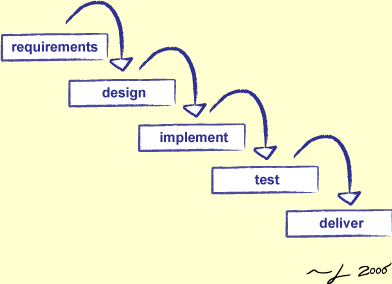
Secondly, when you actually start to map out conversations which centre around what people value and what it would look like for an organisation to move to 'a better place', you realise these conversational processes are not linear (you're not dealing with a software development-type 'waterfall model').

Even when the complexity and reality of the to-and-fro, cut-and-thrust, hypothesis-and-testing of a conversation is realised, the dimension is never simply '2D' -- it is 'history' / 'story' and organisational tiering that calls for something more 'topographic' in nature in our mapping. Perhaps the creation of multiple intersecting maps would assist? ( David -- looking forward to what you have to offer in this space.)

Thirdly, trying to trace the lines of such an engagement made me realise how little I understand of the client's world, and how dialogue, discontent-and-content, agitate in their own space. Their own conversation is largely invisible to us. However ...

Fourthly, our engagement throughout the course of attempting to build business with them tells me that the urgency which we bring to the situation is not theirs -- and we are talking about contentedly discontent organisations here. While the first dialogue with a client will likely provoke a conversation in our own business, followed by the creation of a fresh hypothesis, and the applying of that hypothesis in the next conversation, there is often the perception that the same process of analysing and creating has not taken place within the client's world.

While we may be 'sounding for life, and pushing for movement', the [potential] client organisation may just as open to inaction as to action (though talking about action may be perceived as having almost as much value as action, or may itself be judged to be 'action').

The realisation came to me as I looked at my poxy, 2-dimensional map. One thing it tells me is that the dialogue between an agitator, and a contentedly discontent organisation is heavily weighted to one side (unless the 'passive' organisation perceives a real threat to its passivity from the agitator organisation, and animates its own dialogue to shut the conversation down -- self-preservation can be a powerful motivator).

I'm still not quite sure what can be entirely deduced from this heavily top-weighted map. Is this the nature of agitator organisations engaging with contentedly discontent organisations? There is no question that locating a caring, genuinely discontented person in the organisation could make the process look quite different (as least as I perceive it, rightly or wrongly).

An agitator organisation persists with a pointless exercise if the contentedly discontent organisation perceives it to be nothing more than a noise-making irritation, and a disruption to the status quo.

This may, in the end, be as much an indictment on the foolishness of insensitive agitators as it is on the laziness and care-less-ness of passive organisations.

Saturday, July 3, 2010

Tools to win favour with a difficult child

Perhaps one of the funniest episodes in Blackadder Goes Forth sees Captain Edmund Blackadder (Rowan Atkinson) awaiting execution for disobeying orders from his superiors.

As Blackadder waits in his cell, he is visited by the cheerful but simple Private Baldrick (Tony Robinson), bearing a sack of goods (disguised as a picnic lunch) and [the usual] 'cunning plan'.

The sack contains an escape kit, as Baldrick has surmised that Blackadder's appearance before the firing squad in less than 24 hours is otherwise inevitable. Of course, Baldrick's idea of a useful escape kit differs somewhat from Blackadder's. Blackadder begins to rifle through the sack:

Edmund: Let's see, what have we here? A small painted wooden duck.

Baldrick: Yeah, I thought if you get caught near water, you can
balance it on the top of your head as a brilliant disguise.

Edmund: Yeeeesss, I would, of course, have to escape first. Ah,
but what's this? Unless I'm much mistaken, a hammer and a
chisel!

Baldrick: You ARE much mistaken!

Edmund: A pencil and a miniature trumpet.

Baldrick: Yes, a pencil so you can drop me a postcard to tell me
how the breakout went, and a small little tiny miniature trumpet
in case, during your escape, you have to win favour with a
difficult child.

Baldrick's 'cunning plans' pivot somewhere between the absurd,
the insane and the peculiarly plausible. As Blackadder unpacks
the remainder of the kit, the 'logic' of Baldrick is further
unpacked.

The inclusion of a Robin Hood outfit is ludicrous to Blackadder
but makes perfect sense to Baldrick ("I put in a French peasant's
outfit first, but then I thought, 'What if you arrive in a French
peasants' village and they're in the middle of a fancy dress
party?'").

There is both madness and brilliance to be found in Baldrick's
plan. The obvious tools for a prison breakout won't be found
here.

But what if Blackadder did have to 'win favour with a difficult
child'? What if he did turn up in a French peasants' village
and they were in the middle of a fancy dress party?

It got me thinking about organisations and how they problem
-solve. There is often a laziness to our problem-solving, an
'A or B' / '0 or 1' / 'On / Off' approach. The capacity to be flexible
problem-solvers, to walk around a situation and view it from
many different angles, to realise that if we can only come up
with one way out of a problem then we probably aren't working
that smart, leaves space for the Baldricks of our world.

We may be used to looking for a Swiss passport or a hammer in
our escape kit, but difficult children are not charmed by Swiss
passports.

Insanity may lie the way of a Baldrick-style 'cunning plan', but
that is not to say there is no logic to it. Sometimes wisdom
appears in the garb of foolishness (and, yes, sometimes
foolishness appears in the garb of foolishness).

Sometimes the 'obvious' solution falls short, and it is the painted
wooden duck that delivers the goods.

Tuesday, June 29, 2010

A little piece of sanity

Sometimes a little corner of sanity is all that is needed to stay afloat.

I don't cope well feeling surrounded by chaos. Life is a bit chaotic at the moment. We've had nearly two months of non-stop sickness in the house, and life gets a little furry around the edges.

The front garden has been a saving grace, even in small doses. Most days, that means taking 30 seconds to pull out any little weeds or grass shoots.

When we started living here 2 1/2 years ago, it looked like this:

Now, with a couple of removals (mostly agapanthus and kikuyu!), and some new additions (Grevillea, Kangaroo Paw, Paroo Lily, Gazanias, Dianellas, Emu Bush) over the last few years, it's headed in a fresh direction:


Whenever I head outside to take out the garbage or recycling, I seize the opportunity to soak it up. It's a nice little piece of sanity!